
Why this happens every fall
The first heating demand after summer can reveal an issue that was not apparent while the furnace was idle. A thermostat setting, an accidentally switched-off service switch, a loaded filter or an ignition fault can all prevent heat, but they require different responses. Start with safe, accessible observations rather than assuming the furnace needs replacement. Note what happens when heat is requested, then stop if a warning sign appears. The goal is to identify what can be checked safely and what needs professional testing.
Safety first
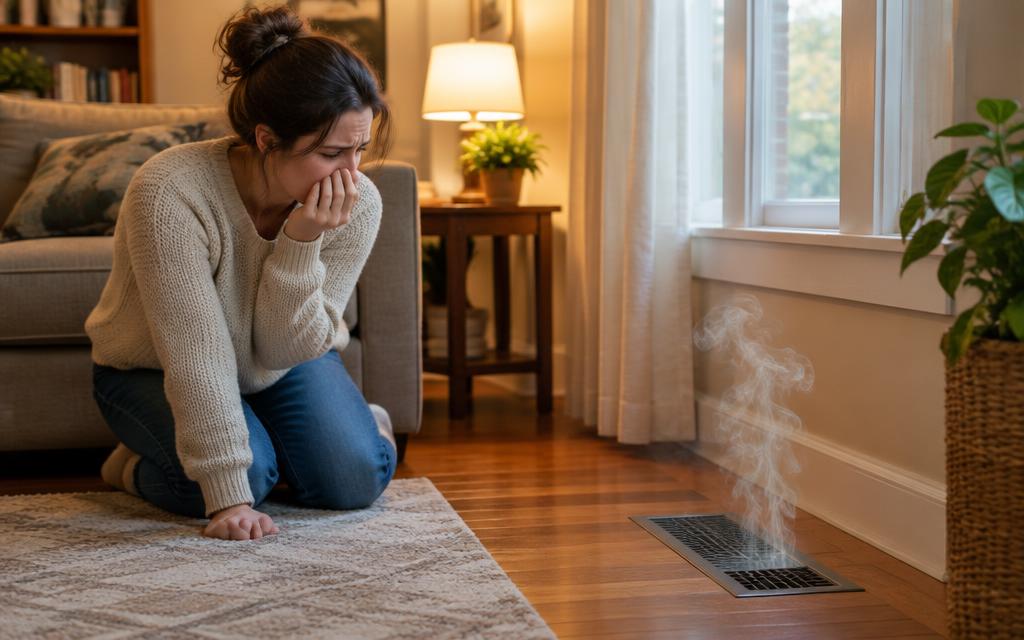
If you smell gas (a rotten-egg odour) anywhere near the furnace, do not flip any switches, do not use your phone inside the house, and do not try to relight a pilot. Leave the house immediately, and once you're safely outside, call PG&E's 24-hour line at 1-800-743-5000 or call 911 if you smell gas strongly or the situation feels urgent. This is the one scenario where you skip every troubleshooting step below and get everyone out first.
A carbon monoxide alarm is an emergency: get everyone outside immediately and call 911 from outside. Do not silence the alarm and keep troubleshooting, and do not re-enter until responders say it is safe. Soot, delayed ignition, scorching or a persistent burning smell also mean stop using the furnace and arrange professional evaluation. If there is smoke or fire, leave and call emergency services. Carbon monoxide has no smell, so absence of a gas odour does not establish safe operation.
Check the thermostat first
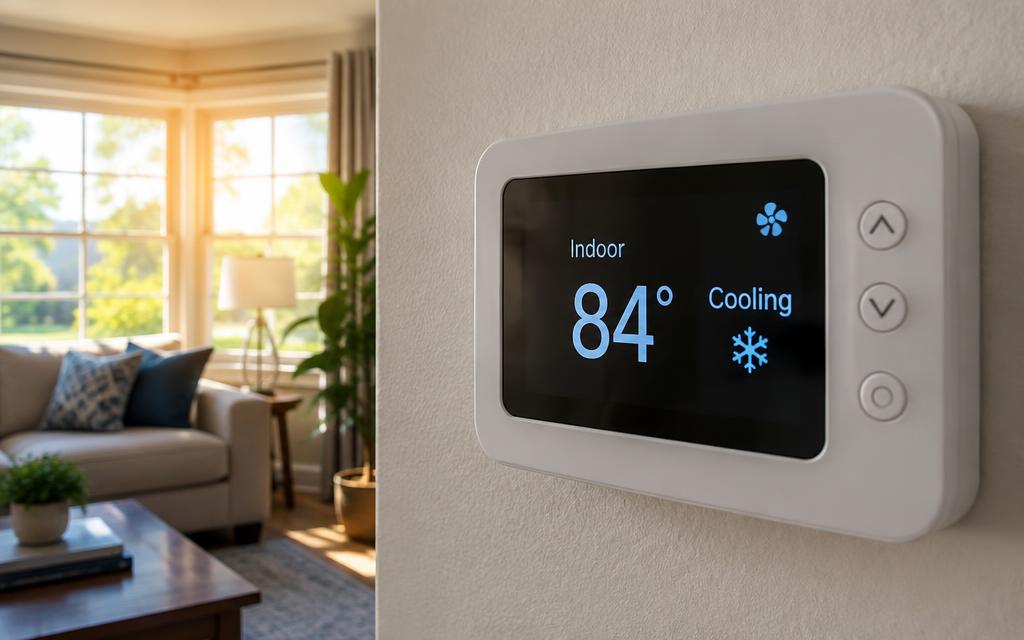
Confirm the thermostat is in Heat mode and the target is a few degrees above the room temperature. Check for an away setting, schedule override or low-battery warning. Replace batteries according to the instructions if appropriate. A smart thermostat may control the equipment without Wi-Fi, so an internet interruption does not automatically explain no heat. Avoid repeated temperature changes while the furnace completes its normal startup sequence. If the display is blank after an accessible battery check, ask a technician to assess the control power rather than opening wiring connections.
Check the power switch and breaker
Furnaces have a dedicated switch nearby that looks like a standard light switch, sometimes labelled, sometimes not, often mounted on or near the unit itself. It's easy to bump it off without noticing, especially if anyone's been near the furnace over the summer for storage or other work. Make sure it's flipped to On.
Check your home's electrical panel for a tripped breaker labelled for the furnace. If it's tripped, you can reset it once. If it trips again immediately, stop and call a technician rather than resetting it again, since a breaker that won't hold is telling you there's an electrical fault that resetting won't fix, and repeated resets risk an electrical fire.
Check the filter
A filter that's been sitting unchanged all summer, especially if the fan ran for air circulation or if the system shares ductwork with central air, can be clogged enough to trip a safety switch that shuts the furnace down before it overheats. Pull the filter and look at it; if it's grey or caked with dust, replace it before trying anything else. This is a five-minute check that resolves more no-start calls than you'd expect.
Check the pilot light or ignition system
Older furnaces may use a standing pilot, while newer equipment commonly uses electronic ignition. A pilot that will not stay lit and an electronic ignition failure can have several causes, including safety-control or gas-supply issues. Do not remove burner covers, adjust gas valves or improvise a relighting procedure. If you are unsure about any manufacturer instruction, leave the system off and arrange Heater Repair. Any gas smell means evacuate first, not another ignition attempt. A professional can test the actual sequence and explain why ignition is being prevented.
Newer furnaces use an electronic igniter instead of a standing pilot. These parts are more reliable but still wear out, usually after years of cycling on and off. If you hear the furnace attempt to start, click several times, and then shut off, that clicking is often the igniter trying and failing, which usually means it needs replacement.
Check the condensate drain on high-efficiency furnaces
If your furnace is a newer high-efficiency model, it has a condensate drain line that removes the water produced during combustion. Over a summer of disuse, this line can develop a clog or grow a bit of algae, and many furnaces have a safety switch that won't let the unit run at all if that drain line is blocked or the float switch detects standing water. Look near the furnace for a small drain line and check for visible blockage or a pan that's overfilled. This isn't a part to take apart yourself, but it's worth mentioning to your technician since it's a common and relatively quick fix.
Listen for what the furnace is doing
When you set the thermostat to call for heat, what actually happens matters for diagnosis. If nothing happens at all, no fan, no clicking, no light, that points toward a power or thermostat issue. If the blower fan runs but you never get heat, that often means an ignition failure. If you hear repeated clicking without ignition, that's usually the igniter or a safety switch refusing to let gas flow. Mentioning exactly what you heard and saw to your technician when you call saves diagnostic time.
Don't keep resetting it
If flipping the breaker or power switch once doesn't fix it, resist the urge to keep cycling it on and off. Many furnaces have safety controls (limit switches, flame sensors, pressure switches) specifically designed to shut the unit down rather than let it run unsafely. Repeatedly resetting and restarting can push past a safety that's doing its job, and it won't fix whatever caused the shutdown in the first place.
What a flame sensor failure looks like
If your furnace lights briefly and then shuts back off, repeating that pattern every minute or so, the flame sensor is a common culprit. This small metal rod sits in the burner flame and confirms to the control board that ignition actually happened; if it's coated with a thin layer of carbon buildup after months of inactivity, it can't reliably sense the flame and the furnace shuts the gas back off as a safety measure. It's a quick fix for a technician but not something to clean or adjust yourself, since it sits directly in the gas burner assembly.
Recent thermostat changes
If a thermostat was replaced during summer, tell the technician the model and when the change happened. A configuration or compatibility issue may only become apparent when heating is requested, even if another operating mode worked previously. Do not open the thermostat base or move wires as a troubleshooting shortcut. Incorrect connections can damage equipment or create a hazard. Record visible settings and error messages instead, and let a qualified technician verify the control wiring and equipment setup.
What to expect from a service visit
A no-start service visit starts with the symptom and safe checks of thermostat demand, equipment power and airflow, then follows the manufacturer’s ignition sequence. The technician may test ignition components, gas pressure, flame sensing and safety controls as appropriate to the model. Describe what you observed and which accessible checks you completed; that helps investigation without replacing professional testing. At Chill, the findings are explained in plain language and a fixed price is provided before work starts. Do not assume a particular failed part until the testing supports it.
When to call for professional heater repair
If you've checked the thermostat, breaker, filter, and power switch and the furnace still won't start, it's time to call for Heater Repair. A technician can safely test the igniter or pilot assembly, check gas pressure, inspect the flame sensor, and verify the safety switches are reading correctly, all of which require tools and training beyond a visual check. This is also the right move any time gas or combustion is involved, since mistakes there carry real safety risk.
If your furnace is older than fifteen years, has needed more than one repair in recent winters, or is giving you a string of these no-start problems, ask your technician for a straightforward comparison of repair versus Full System Replacement costs. An ageing furnace that keeps needing attention is often a sign the system as a whole is nearing the end of its useful life.
Preventing this next fall
The best fix for a furnace that won't start after a summer of disuse is to not let it sit untested in the first place. A fall Tune-Ups & Maintenance tune-up, ideally scheduled before the first cold snap, checks the igniter or pilot, cleans the burner assembly, verifies the condensate drain is clear, and tests the safety controls while there's still time to order a part if something needs replacing. Catching a weak igniter in October beats discovering it on the first genuinely cold night.
Frequently asked questions
Is a furnace that will not start safe? No heat by itself does not establish whether the equipment is safe. A safety control may be preventing operation, but a power or control fault is also possible. Do not repeatedly restart it or bypass a safety device. Gas odour, a carbon monoxide alarm, smoke or scorching require the emergency or stop-and-call actions described above, regardless of whether the furnace is running.
Can I relight the pilot myself? A pilot problem is not an invitation to experiment with gas equipment. Keep covers in place, do not adjust valves or use an improvised flame, and have a technician investigate an extinguished or unreliable pilot. If you smell gas, skip troubleshooting entirely: leave without operating switches and call PG&E from outside. A carbon monoxide alarm means leave and call 911 from outside.
Why did my furnace work fine last spring but not now? Months of disuse let dust settle, let small mechanical wear finally show up, and give condensate lines on high-efficiency units time to clog or grow algae. The parts were often already marginal; the summer break is just when they finally fail a test.
How much does furnace repair typically involve? It ranges from a simple filter swap or a reset breaker that costs nothing, up to an igniter or flame sensor replacement, up to a more involved repair for gas valve or safety switch problems. A technician can give you an accurate number once they've diagnosed the actual cause.
Should I fix a gas valve or wiring myself? No. Gas-pressure adjustments, burner work, electrical testing and safety-control repairs belong with qualified professionals. Never bypass a flame sensor, pressure switch or limit switch to make the heater run. Warranty requirements vary, so consult the equipment’s actual warranty rather than assuming a generic rule. The important immediate issue is safe operation, not getting the system running at any cost.
A useful next step
For a related decision, read our guide to planning seasonal heating and cooling maintenance. Bring the observations, equipment details and any previous service records to your conversation with Chill. If you need an assessment, contact the team to describe the problem and confirm the appropriate service. These guides support informed questions, not remote diagnosis; equipment-specific testing remains the basis for deciding what work is needed.
Sources
The U.S. Department of Energy’s Consumer Guide to Home Heating and Cooling explains seasonal upkeep, equipment sizing, filters and duct airflow. Its older efficiency examples are background information, not current product requirements or a savings promise. For emergency instructions, consult PG&E’s gas safety guidance.

Written by Cameron Hill
Owner and licensed technician, Chill Heating & Air · CA Lic. #1115420