

The first thing to check
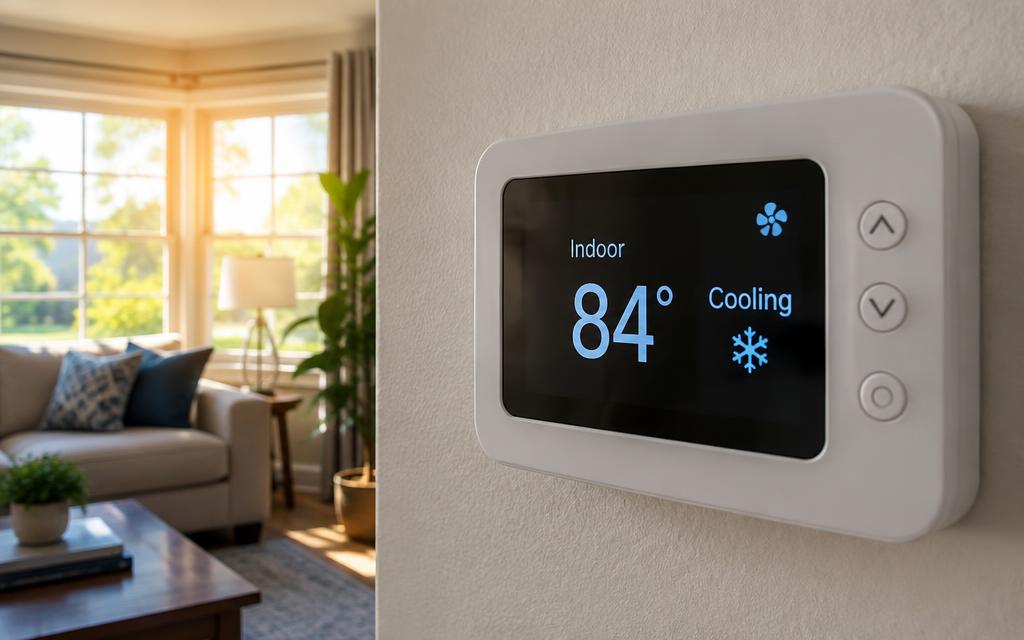
Start with the thermostat. Confirm it is set to Cool and the target is below the room temperature. Check whether a schedule or away mode has overridden your change. If the fan is set to On rather than Auto, the blower may circulate room-temperature air between cooling cycles; that alone does not prove a fault. Record whether the warm air persists during an active cooling call. You do not need to remove the thermostat cover or change its wiring to make these observations.
If the thermostat looks correct and warm air is still coming out, give the system a few minutes. Compressors need a short rest between cycles, and if the system was just switched off and back on, or if a breaker tripped, there's often a built-in delay before the compressor restarts. Warm air during that window is normal and nothing to worry about yet.
How a dirty filter can affect cooling
A clogged filter is one possible cause of weak or warm airflow, but the symptom alone cannot confirm it. Dust, pet hair and other debris can reduce airflow across the indoor evaporator coil. In some systems that restriction allows ice to form, making airflow and cooling worse. A dirty filter is worth checking first because it is an accessible maintenance item, not because every warm-air problem has the same cause. Electrical faults, refrigerant problems and duct leakage can produce similar symptoms.
Use the equipment instructions to locate the user-accessible filter, switch the system off and inspect it without opening service panels. Look for accumulated dust, damage or a filter that has become visibly loaded. Match the replacement size and approved filter type, including the airflow arrow. Check disposable filters monthly during heavy use, then replace them according to their condition and manufacturer instructions. Deep-media filters may have different intervals. Do not wash a disposable filter or assume a light test measures its remaining capacity. If the filter location requires attic access or unsafe climbing, leave it to a technician.
Check the outdoor unit
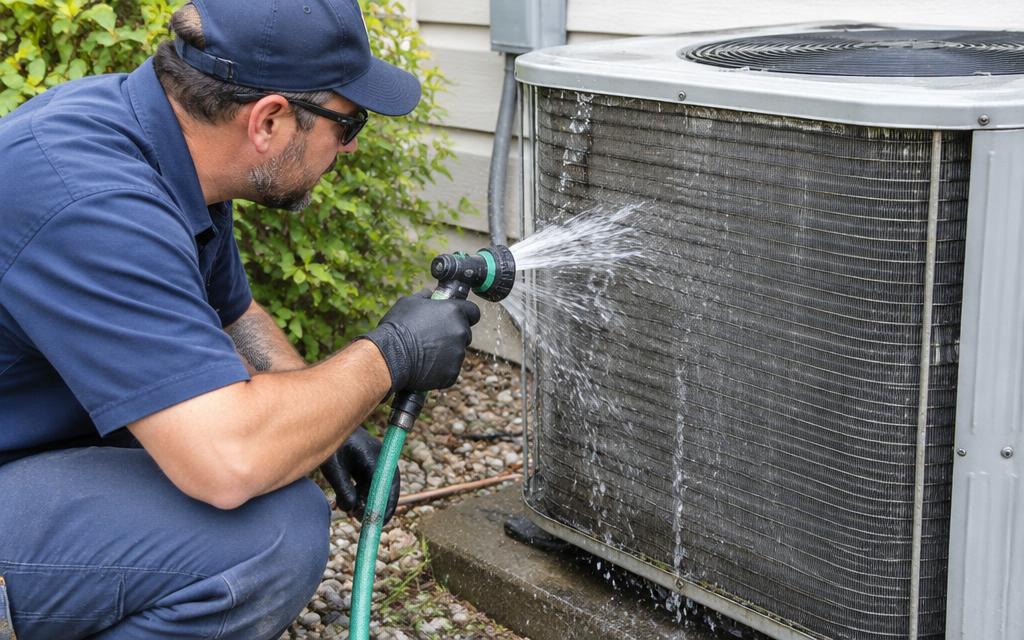
Look at the outdoor condenser from a safe position. Its coil needs unobstructed airflow to release heat. Shrubs, stored furniture and loose debris near the unit can interfere with that airflow. Remove loose objects from the surrounding area without reaching through the grille or touching the fins. Follow the manufacturer’s clearance guidance rather than a universal distance rule. Coil cleaning, removing covers and working near wiring are professional tasks. Do not spray the electrical compartment or use a pressure washer, which can damage fins and force water into places it does not belong.
While you're out there, listen. A condenser that's running but not spinning its fan, or a fan that's clearly struggling to turn, points to a mechanical problem that needs a licensed technician rather than a quick fix you can do yourself. Don't try to force the fan by hand or remove any panels, since these units carry high voltage components.
A frozen evaporator coil
Weak airflow, visible ice on an accessible refrigerant line or water near the indoor equipment can point to an iced coil, but other faults can cause similar symptoms. Stop cooling and arrange assessment if ice is present. Fan-only operation may help thaw it if the equipment instructions allow and there is no water or electrical hazard. Do not reach into the equipment, chip ice or assume that thawing fixes the underlying cause. Restricted airflow, blower problems and refrigerant issues need different repairs.
Do not attempt to add refrigerant yourself or pry ice off the coil. Refrigerant handling requires EPA certification and the correct equipment, and the wrong type or amount can damage the compressor outright. Once it's thawed, a technician can pressure-test the system, find the actual cause, and recommend the right fix.
Refrigerant leaks need a licensed technician
Refrigerant circulates in a sealed system; it is not fuel that normally gets consumed. An actual low charge may indicate a leak or an incorrect previous charge, but a homeowner cannot determine charge from warm air alone. Cooling that declines gradually, ice or unusual sounds warrant testing rather than an assumed refill. A technician checks operating conditions and appropriate measurements, then investigates any suspected leak. Adding refrigerant without understanding the cause can leave the original problem unresolved.
Leak detection, recovery and refrigerant work belong with appropriately qualified technicians using the right equipment. Ask whether the proposed work includes locating the leak, what can be repaired and whether the repair can be verified. Some faults need further testing before the full price is known. A refill alone is not equivalent to repairing a leak, and a recurring charge problem deserves an explanation rather than repeated top-offs. Keep the service findings with your other equipment records.
Electrical components that fail quietly
Capacitors and contactors help start or control the compressor and outdoor fan. A failed component can leave the indoor blower circulating air without active cooling. These faults cannot be diagnosed reliably by listening alone, and replacement cost depends on the part, access and what else testing finds. A technician checks the electrical circuit and motor condition before recommending a repair. Do not remove the outdoor cover, touch wiring or attempt a capacitor test. Capacitors can retain an electrical charge after power is switched off, and a system that appears silent may still be energised.
Ductwork problems you might not see
If your attic ductwork has a disconnected section, a crushed flex run, or gaps at the register boots, cool air can be dumping into the attic instead of your living room, especially in older homes or after any attic work like insulation blowing or wiring upgrades. You'll usually notice this as some rooms staying warm while others cool fine, along with a jump in your summer electric bill. A camera inspection of accessible duct runs can usually confirm this quickly.
When it's time to call a professional
Request AC Repair if warm airflow continues after accessible thermostat and filter checks, or if you notice ice, unusual noises or repeated short cycles. Those symptoms warrant investigation, but they do not identify one failed component by themselves. Stop using equipment that is icing or showing signs of electrical trouble. Tell the technician whether the problem affects every room, when it began and whether any recent maintenance or thermostat changes preceded it. Clear observations help avoid guesswork.
Short cycling and its warm-air symptoms
A system that turns on, runs for a couple of minutes, and shuts off again rarely gets a chance to actually cool the air before stopping, which means what reaches your vents feels tepid even though the unit is technically running. Short cycling can come from an oversized system that was never sized correctly for your home, restricted airflow from a clogged filter or coil, or a failing thermostat sensor reading the wrong temperature. It's hard on the compressor regardless of the cause, since the start-up draw on a compressor is the most stressful moment in its cycle, and repeating that every few minutes shortens its life considerably.
If you notice short cycling alongside warm air, don't just let it keep running in that pattern hoping it resolves itself. The combination usually means there's a specific fault, whether electrical, thermostat-related, or airflow-related, and it's worth having it looked at before the repeated stress leads to a bigger failure.
Two-story and zoned homes
If you have a multi-storey home or a zoned system and only the upstairs is blowing warm while downstairs cools fine (or vice versa), the cause is often different from a whole-house warm air problem. Zone dampers can fail in a closed position, a zoning control board can lose communication with one zone, or ductwork serving the affected area can have a disconnect or blockage. This is worth mentioning specifically when you call for service, since it points the technician toward the zoning equipment and ductwork rather than the core cooling components first.
If the system has needed repeated repairs, ask for a written comparison of the specific AC Repair and a correctly sized Full System Replacement. Consider condition, maintenance history, repair warranty and how long you plan to keep the home. Age helps frame the conversation but does not prove replacement is necessary. A new unit is not guaranteed to pay for itself, and replacing equipment alone will not solve a disconnected duct or an airflow problem.
Preventing the next warm-air call
A seasonal Tune-Ups & Maintenance visit can identify dirty coils, airflow restrictions and developing component issues before they become obvious comfort problems. Testing follows the equipment specifications and operating conditions; it is not simply adding refrigerant on a schedule. Ask what was checked, what needs attention and what can wait. Maintenance supports reliable operation but cannot prevent every breakdown or guarantee lower bills. Keep filter and service records so future decisions are based on the system’s actual history.
Frequently asked questions
Why does warm airflow happen mainly in the afternoon? Higher outdoor heat, solar gain, duct problems, airflow restrictions and equipment faults can all make afternoon comfort worse. Check whether all rooms are affected and whether the thermostat is actually calling for cooling. A system falling behind its target is not the same as one producing no cooling at all. Share those distinctions during diagnosis rather than assuming that refrigerant is the cause.
Can I just add refrigerant myself to fix warm air? No. Refrigerant is a regulated substance that requires EPA certification to purchase and handle, and simply adding more without finding the leak doesn't fix the underlying problem. It can also damage the compressor if the charge ends up wrong for your specific system.
Is it normal for air to feel warm right when the AC turns on? A few seconds of air that isn't yet cold is normal as the system ramps up. If it stays warm for more than a minute or two, something else is going on.
How much does it cost to fix warm airflow? The price depends on the diagnosed cause, equipment, access and parts required. Replacing a user-accessible dirty filter is different from repairing a leak or compressor. Ask for the findings and a written repair price before approving work. Avoid comparing quotes that cover different tasks, and ask whether further testing is needed before the final scope can be established.
Should I keep running the system while I wait? Stop cooling if ice is visible, airflow is very weak, water threatens electrical components or the equipment makes grinding noises. Fan-only operation may help thaw ice if the manufacturer permits it and there is no electrical or water hazard. Do not chip ice or force a restart. If anything smells electrically burnt, stop operation and seek professional advice; smoke or fire requires leaving and calling 911.
A useful next step
For a related decision, read our guide to weighing a cooling repair against replacement. Bring the observations, equipment details and any previous service records to your conversation with Chill. If you need an assessment, contact the team to describe the problem and confirm the appropriate service. These guides support informed questions, not remote diagnosis; equipment-specific testing remains the basis for deciding what work is needed.
Sources
The U.S. Department of Energy’s Consumer Guide to Home Heating and Cooling explains seasonal upkeep, equipment sizing, filters and duct airflow. Its older efficiency examples are background information, not current product requirements or a savings promise.

Written by Cameron Hill
Owner and licensed technician, Chill Heating & Air · CA Lic. #1115420