
When wildfire smoke settles over a neighbourhood, the air inside a house does not stay clean on its own. Smoke particles are small enough to slip through door gaps, window frames, and the gaps around exterior vents, so even a home that is shut up tight will see indoor particle levels climb during a smoke event. Knowing what actually helps, and what does not, makes those stretches easier to manage.
What smoke particulate actually is
Smoke particulate is mostly made up of very fine particles, the kind small enough to reach deep into the lungs. That is different from an odour problem, and it matters because the tools that remove odors and gases are not the same tools that remove particles. A carbon-based deodorizer or an ionizer marketed to clear smoke smell is not doing the job that actually protects the people breathing that air. The goal during smoke season is particle filtration, not fragrance.
Why a central system matters during a smoke event
A central air conditioning or heating system that is already installed in a home is one of the more useful tools available during a smoke event, because it can pull air through a filter continuously rather than relying on a portable unit to treat one room at a time. Whether running the system is the right move, and in what mode, depends on the specific system, the ductwork, and whether the outdoor air intake (if the system has one) can be closed off during a smoke event.
Filter quality and compatibility
EPA recommends MERV 13 or higher for central filtration during smoke events when the system can accommodate it. The MERV rating describes particle capture under a test standard, not a guarantee that every filter with that rating has identical airflow resistance. Check the equipment instructions, filter dimensions and allowed pressure drop. An incompatible or heavily loaded filter can reduce airflow. A pleated filter may perform differently from another filter with the same rating, so choose a suitable product rather than simply buying the highest number on the shelf.
Before moving to a MERV 13 filter, it is worth having the filter slot, duct sizing, and blower checked for compatibility. Our Indoor Air Quality page covers filtration options in more depth, and it is worth a conversation before a smoke season hits rather than during one.
Particles versus gases and odors
HEPA and MERV-rated filters capture particles; they do not reliably remove the gases in smoke. Some air cleaners use activated carbon or other sorbent media for certain gases, but performance depends on the amount of media, pollutant and operating conditions. A thin carbon layer is not a complete solution to wildfire gases, and absence of odour does not prove safe air. Avoid equipment that intentionally produces ozone, which can irritate lungs. Reduce exposure, follow public-health advice and relocate when home conditions cannot be kept safe.
Recirculating isn't right for every home
Many residential central systems normally recirculate indoor air; they do not all have a thermostat button called recirculate. Others include a separate outdoor-air intake or ventilation system. Follow manufacturer instructions and EPA smoke guidance for closing a controllable intake or selecting an appropriate mode. Never block required combustion venting or permanently disable ventilation. If you do not know what your equipment brings indoors, ask a technician before changing it. Continuous fan operation can increase filtration in a compatible setup, but filter loading, airflow and the home’s temperature still need attention.
Portable units and whole-home filtration
Portable air cleaners with true HEPA filtration can help in a single room, particularly a bedroom used during a multi-day smoke event, as long as the unit is sized to the room and not undersized for it. A HEPA unit built for a small office will do little in a large open living space. Checking the clean air delivery rate against the actual square footage of the room is a better guide than brand name alone.
A whole-home approach, where filtration is built into the ductwork and treats air throughout the house as the system runs, covers more ground than a portable unit moved from room to room. It also means filtration keeps working in rooms where nobody remembered to place a portable unit. Whether a whole-home solution fits a given duct system and budget is worth discussing directly with a technician who has seen the ductwork, rather than assuming one size fits all homes.
Sealing the house and the tradeoffs that come with it
Sealing a home up during a smoke event is usually sound advice: closing windows and exterior doors, and avoiding activities that generate more particulate indoors, like burning candles, frying food, or using a fireplace. But sealing a house completely also means indoor air quality depends more heavily on whatever filtration is running, since fresh air exchange has been reduced. That is part of why filter quality matters more, not less, once windows are shut for days at a time.
Heat and smoke often arrive together
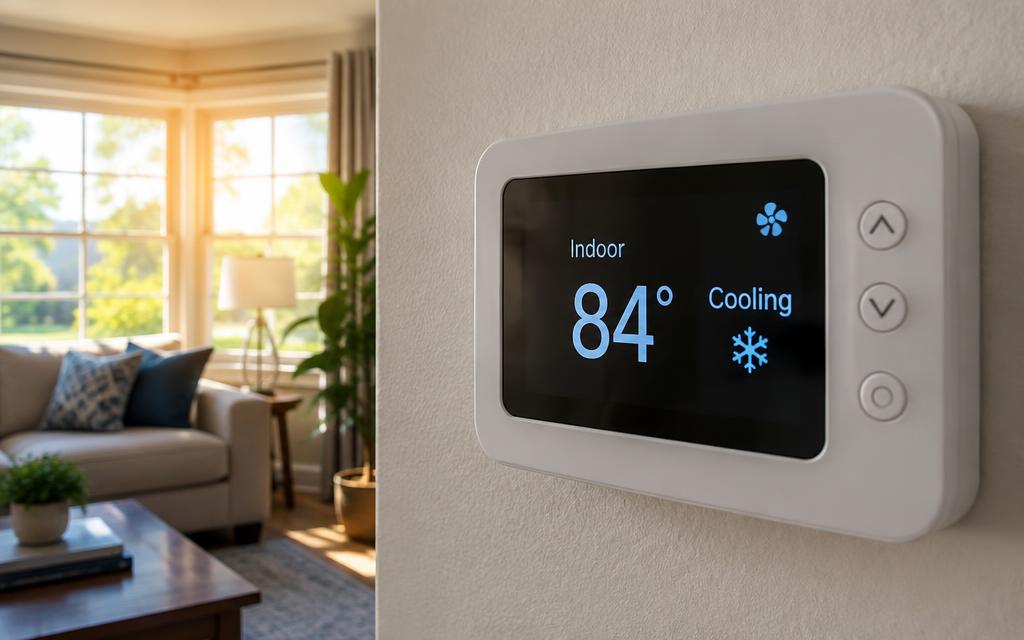
Humidity and temperature matter too during a smoke event, especially in a long heat wave that often accompanies wildfire conditions. If a home has to be sealed up during high outdoor heat, the cooling system needs to be functioning properly to keep the home safe and livable without needing to open windows for relief. A system that is already struggling with reduced airflow from an old filter is a bad combination with high heat and smoke happening at the same time, which is one more reason a seasonal check before fire season starts is worth scheduling.
Safety comes before comfort
It's worth being direct about evacuation and safety: no filter, no air cleaner, and no amount of sealing a house replaces following evacuation orders or air quality warnings issued by local authorities. Filtration reduces exposure while a home is occupied under a smoke advisory; it is not a reason to stay in a structure that officials have told residents to leave, and it does nothing to protect against an actual fire threat to the property itself.
Checking local air quality readings during a smoke event, rather than relying on whether smoke is visible from a window, gives a better sense of actual conditions, since particulate levels can be high even when visibility looks fine, and fairly moderate even on days that look hazy.
After the smoke clears
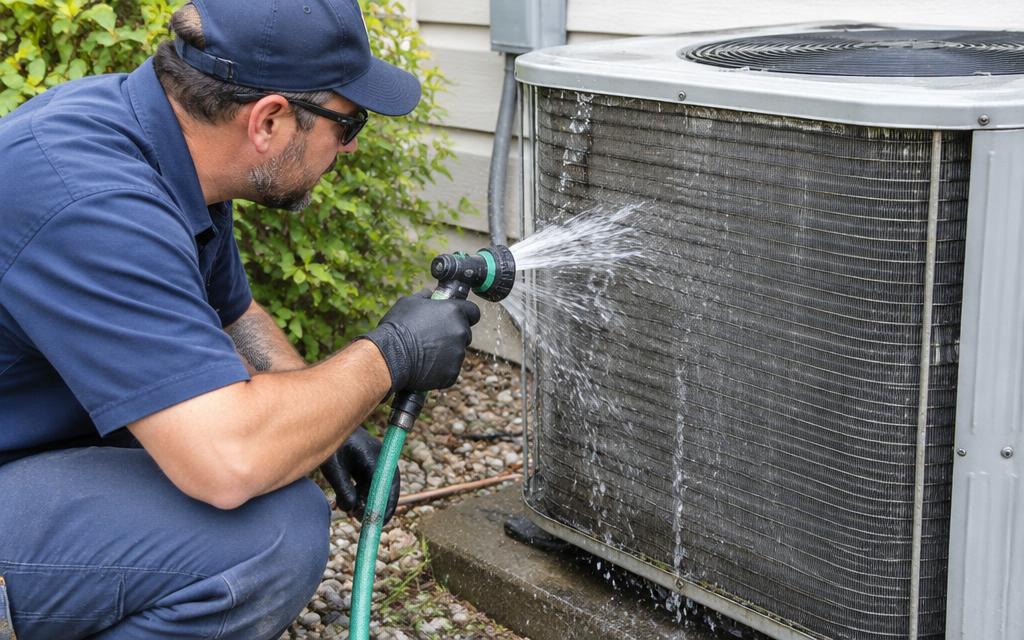
After a smoke event passes, filters that were doing their job will look it. A filter that has been catching heavy smoke particulate for several days should be changed rather than left to keep running at reduced efficiency, even if it is not yet at its scheduled replacement date. Coils and ductwork can also accumulate residue after a heavy smoke season, which is part of what a seasonal Tune-Ups & Maintenance is meant to catch before the next season of heavy use.
When to get a professional opinion
None of this requires guessing. A technician can look at a specific system, the filter slot size, whether there is an outside air intake, and the condition of the ductwork, and give a straight answer about what filtration makes sense for a particular home rather than a generic recommendation. If smoke events are a recurring concern in a given area, that conversation is worth having well before the next one arrives, through our contact page or as part of a scheduled Tune-Ups & Maintenance.
Households with respiratory conditions
People with asthma, COPD or other respiratory conditions, children, older adults and pregnant people may need additional precautions during smoke events. Follow personal medical advice, keep prescribed medicines available and identify a safer indoor location ahead of time. A heating-and-air technician can advise on equipment and filtration, not diagnose symptoms or replace a clinician’s guidance. If breathing symptoms become concerning, seek medical advice promptly. For an emergency, call 911. Plan for both smoke exposure and excessive indoor heat before deciding to stay in a tightly closed home.
Thinking in terms of a season, not a single day
Smoke exposure is cumulative across a season, not just an issue on the single worst day. A region that sees repeated smoke events across a summer is asking more of its filtration, its ductwork, and its system components than a region that sees one bad week and then clear air for months. That is part of why a maintenance plan built around the local fire season, rather than a generic twice-a-year schedule, tends to serve Valley homes better. Checking filtration condition after each smoke event, rather than waiting for a fixed calendar date, catches a filter that has done more work than it was designed for.
Dust and ash that settle on exterior surfaces during a smoke event can also make their way indoors through normal foot traffic and open doors between smoke days, so cleaning routines matter alongside filtration. None of that substitutes for proper particle filtration at the system level, but it reduces the overall load the filtration has to manage.
EPA also discusses do-it-yourself air cleaners as a lower-cost option when commercial units are unavailable. Use current EPA instructions, a suitable newer safety-certified fan and correctly fitted filters rather than improvising around an old or damaged fan. Keep the unit stable, unobstructed and away from children, and follow electrical and fire-safety precautions. Such devices can reduce particle levels when appropriately built and used, but they do not remove all smoke gases or replace evacuation guidance. A properly sized commercial HEPA cleaner remains another practical option for a cleaner-air room.
Ductwork can undercut a good filter
A system's ductwork plays a bigger role in smoke-season air quality than most homeowners expect. Leaky return ducts running through an attic or crawlspace can pull in unconditioned, unfiltered air from outside the living space, meaning the air being circulated has bypassed the filter entirely before it ever reaches a room. During a heavy smoke event, that kind of duct leakage can undercut even a well-chosen filter, because a meaningful share of the air reaching the vents never passed through it. A duct inspection as part of a seasonal visit can catch this kind of leak well before fire season tests it.
Fan settings during a smoke event
Thermostats and fan settings are worth understanding too. Many systems have a fan setting separate from the heating or cooling call, and setting the fan to run continuously rather than cycling only when the system calls for heating or cooling means air is being pulled through the filter more often during a smoke event. Whether that is advisable for a specific home depends on the system's fresh-air intake setup discussed earlier, which is why a blanket recommendation to "just run the fan all the time" does not fit every household equally.
Stocking filters ahead of fire season
Replacement filters during smoke season are often harder to find in local stores once a regional smoke event is underway, since demand spikes alongside everyone else's. Keeping a couple of correctly rated replacement filters on hand before fire season starts, confirmed compatible with the specific system, avoids the scramble when smoke actually arrives and the right filter is sold out at every nearby store.
A useful next step
For a related decision, read our guide to filter checks between seasonal service visits. Bring the observations, equipment details and any previous service records to your conversation with Chill. If you need an assessment, contact the team to describe the problem and confirm the appropriate service. These guides support informed questions, not remote diagnosis; equipment-specific testing remains the basis for deciding what work is needed.
Sources
U.S. Environmental Protection Agency, Wildfires and Indoor Air Quality (IAQ). U.S. Environmental Protection Agency, Air Cleaners and Air Filters in the Home.

Written by Cameron Hill
Owner and licensed technician, Chill Heating & Air · CA Lic. #1115420